Custom deck design and build
Combine a full custom deck build with railing installation in a single project - one crew, one permit process, one timeline.
Learn More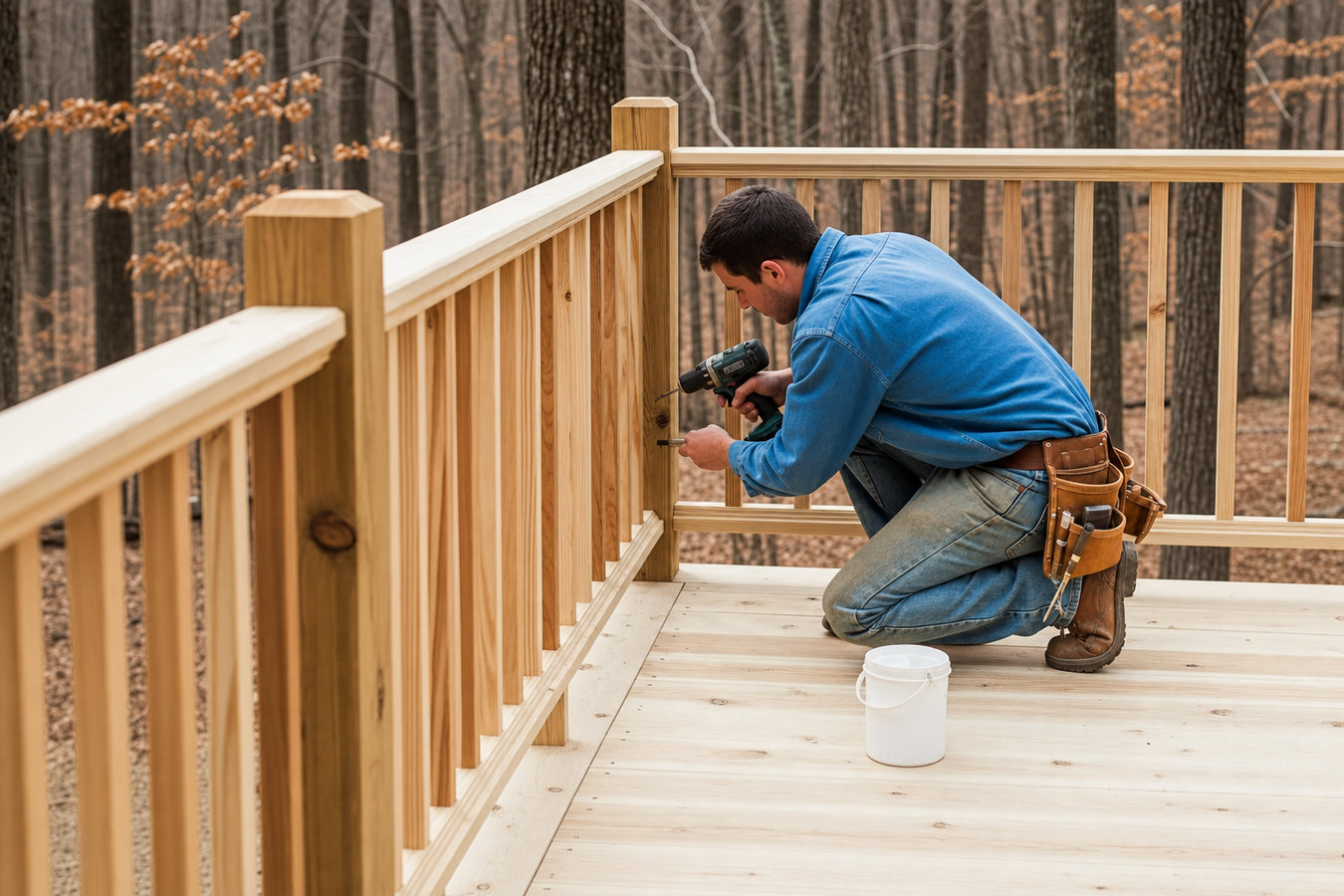
Replace a wobbly or rotting railing with a properly anchored, city-inspected system that holds up through Antioch summers and wet winters.
Deck railing installation in Antioch, CA involves replacing or installing posts, balusters, and top rails that meet city permit requirements - most straightforward replacement projects are completed in one to two days of active work once the permit is approved.
A large share of Antioch homes were built between the 1970s and early 2000s, which means many original railings are now at the age where wood rot, post shifting, and baluster spacing issues show up. California building code requires a railing on any deck that sits 30 inches or more above the ground - so if yours is wobbling, leaning, or has gaps a child could fit through, it is a safety issue, not just an aesthetic one. If you are also thinking about multi-level decks or a full deck replacement, we often combine both projects to save time and keep costs down.
We handle the permit, inspect the deck frame before anything new goes in, and choose materials that hold up to Antioch's heat and wet winters so you are not back to square one in a few years.
Stand at the top of your deck stairs and push firmly on a railing post. If it moves, flexes, or creaks, the post anchor has likely weakened. A railing that moves under pressure is not safe to lean on, and this is the most common reason Antioch homeowners call for a replacement.
Run your hand along the bottom of the wood posts where they meet the deck surface. If the wood feels soft, spongy, or crumbles when you press it, rot has set in. Antioch's hot summers and wet winters create exactly the conditions that accelerate this kind of decay in older wood railings.
If your railing tilts rather than standing straight up, the posts may have shifted. In Antioch, this is sometimes caused by the clay soil beneath the deck expanding and contracting with the seasons, gradually pushing footings out of position - and fixing only the railing without checking the foundation will not hold.
Walk along your railing and look at the spacing between the vertical pieces. If some gaps are noticeably wider than others, or if you can fit more than a few fingers through easily, the railing may no longer meet current safety requirements. This is especially worth checking on decks built before the mid-2000s.
We install and replace deck railings in wood, composite, aluminum, and cable configurations. Every project starts with a frame inspection - before we quote the full job, we check the condition of the rim joist and posts, because installing new railings on a weakened frame creates problems down the road. If you are pairing a railing replacement with custom deck design and build work or a full deck rebuild, we scope both together so you get one installation rather than two visits.
Material choice matters in Antioch's climate. Composite and aluminum railings require very little upkeep and handle the summer heat and winter rain cycle without cracking or rotting. Pressure-treated wood is a cost-effective option when it is properly finished - but it needs regular attention to stay looking good and structurally sound. We walk you through the options so you pick what fits your budget and how much maintenance you want to do.
Suits homeowners looking for the lowest upfront cost - with a proper finish and regular sealing, wood railings perform well in Antioch's climate.
Suits homeowners who want low maintenance - composite handles the heat-cold cycle without cracking or fading and typically comes with a manufacturer warranty.
Suits homeowners who want a clean, modern look with no painting or sealing - aluminum does not rot, warp, or rust and holds its finish for decades.
Suits homeowners who want an open, view-preserving look - cable systems are installed with posts engineered for lateral load and tensioned to meet safety spacing requirements.
Antioch sits in the inland East Bay where summer temperatures regularly climb above 95 degrees and winter rains arrive in concentrated bursts. That cycle is hard on untreated wood railings - they crack and dry out in July, then soak up moisture from November through March. Many homes in Antioch were built in the 1980s and 1990s, which means a large share of original wood railings are now 25 to 40 years old and showing those effects. Composite and aluminum systems were designed for exactly this kind of climate and eliminate most of the maintenance cycle entirely. Homeowners in Pittsburg and Brentwood deal with the same conditions, and we bring the same material-first approach to every railing project across the region.
The clay soil common across Contra Costa County adds a structural layer to railing work that gets overlooked. Clay expands when wet and contracts when dry - a cycle that can gradually shift deck footings and cause posts to lean over time. Before we install anything new, we check whether the underlying frame and footings are still solid. Newer Antioch neighborhoods near Lone Tree Way often have HOA design guidelines that govern railing color and material, and we flag that step early in the process so approval does not delay the job after it has already started.
We ask how long your railing runs, what material it is currently made of, and whether you have noticed wobbling or rot. This helps us show up to the estimate with the right information. We reply to all inquiries within one business day.
We come to your home, measure the railing run, and inspect the deck frame. In Antioch, this step often turns up rot or soil-related shifting in the posts underneath - we tell you what we find so there are no surprises later.
We apply for the building permit through the City of Antioch Building Division - this typically takes a few business days to a couple of weeks. We handle all paperwork. You just need to factor the permit window into your timeline.
Most railing projects are done in one to two days. After installation, we schedule the city inspection - once it passes, the permit is closed. We walk the railing with you before we leave and answer any maintenance questions.
We inspect the frame, pull the permit, and complete most railing projects in one to two days.
(925) 503-1287We check the rim joist and post condition before we quote the job. On Antioch homes built in the 1980s and 1990s, hidden rot or clay-soil shifting is common. Finding it during the estimate means no surprise add-ons once work has started.
We apply through the City of Antioch Building Division, coordinate the inspection, and close out the permit. You never have to navigate that process yourself. Verify our contractor license anytime through the California Contractors State License Board - it is free and takes about two minutes.
We recommend railing systems based on how they perform in the inland East Bay climate - not just what looks good in a catalog. The North American Deck and Railing Association sets best-practice installation standards we follow on every project, including post anchoring and baluster spacing requirements.
Many Antioch neighborhoods near Lone Tree Way and the Hillcrest area have HOA design guidelines covering railing color, material, and style. We flag this early and help you put together what your HOA needs so the project does not stall before it starts.
Every railing we install is anchored through the deck frame, not just surface-mounted, and every project goes through a city inspection before we call it done. That gives you a railing that is safe, legal, and will not become a problem at resale.
Combine a full custom deck build with railing installation in a single project - one crew, one permit process, one timeline.
Learn MoreEvery multi-level deck needs code-compliant railings on every elevated platform - we design and install both together.
Learn MoreCall (925) 503-1287 or request a free estimate online. We serve Antioch, Brentwood, Pittsburg, and all of Contra Costa County.